English Greyhound Derby Betting Guide
Best Greyhound Betting Sites – Bet on Greyhounds in 2026
Loading...
The Derby: Where Greyhound Racing Commands the Biggest Stage
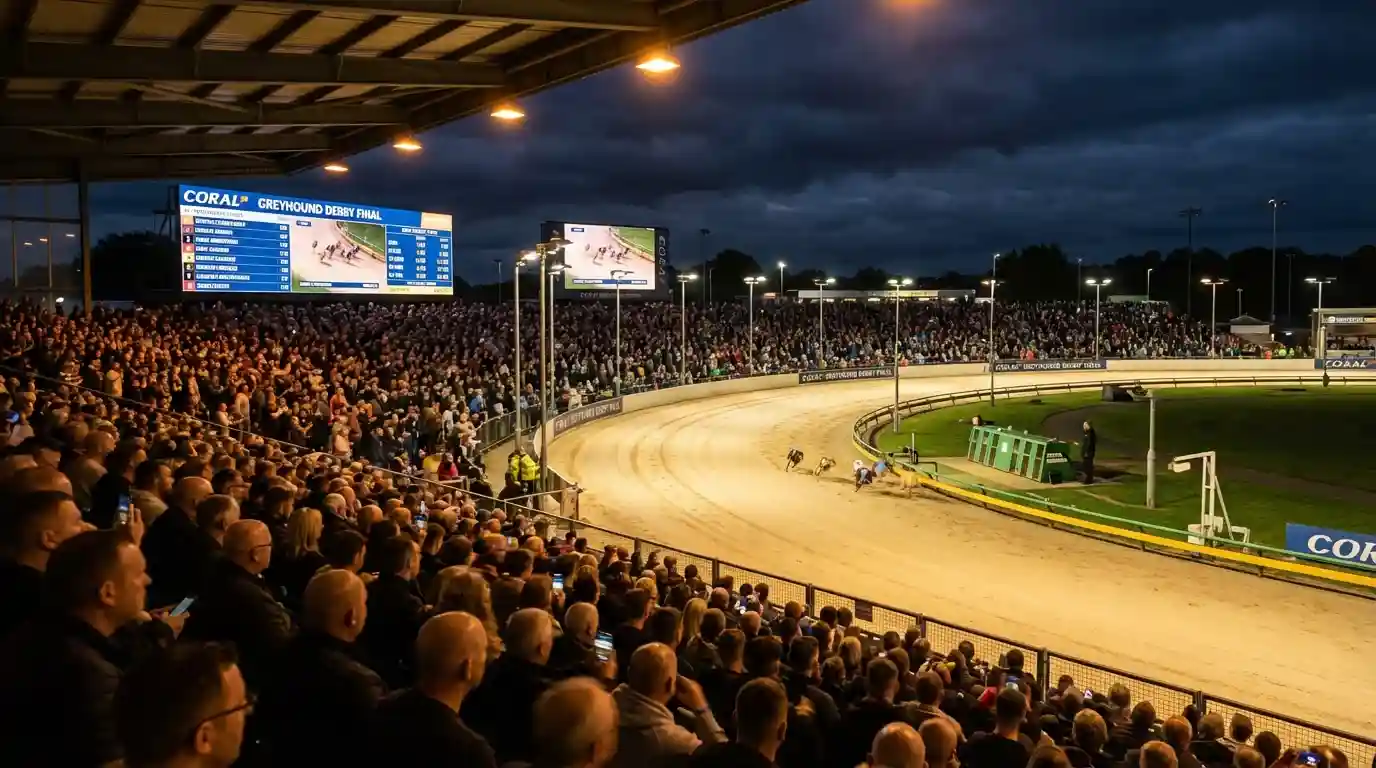
The English Greyhound Derby is the most prestigious event in the sport. It’s the race every trainer wants to win, the one the betting public watches most closely, and the annual occasion where greyhound racing breaks through from specialist interest into broader sporting awareness. The Derby final — six dogs, one race, everything on the line — is as pure a test of speed, temperament, and racing ability as the sport produces.
For bettors, the Derby represents a different challenge from day-to-day graded racing. The tournament format stretches across multiple rounds over several weeks. The ante-post market opens early and evolves with each round. The form picture shifts as dogs progress through heats, quarter-finals, and semi-finals, and the information advantage sits with punters who follow the entire competition rather than those who parachute in for the final. The Derby rewards patience, attention, and the willingness to form opinions before the market has settled on its own.
The event has a history stretching back to 1927 and has been hosted at various venues over the decades — White City, Wimbledon, and more recently Nottingham and Towcester. The host venue matters for betting purposes because it determines the track configuration that the competitors must navigate, and some dogs handle specific tracks better than others. Knowing the venue, its characteristics, and which running styles it favours is the first layer of Derby analysis.
Tournament Format: From First Heats to the Final Trap
The Derby operates as a knockout tournament with progressive rounds. The exact structure varies slightly between years depending on the host track and organiser, but the typical format runs as follows: first-round heats reduce a large entry field to the qualifiers for the quarter-finals. The quarter-finals produce semi-finalists, and the semi-finals determine the six dogs that contest the final.
Each round consists of six-dog races over the Derby distance, which is currently 500 metres at the host venue, Towcester Greyhound Stadium. Dogs qualify by finishing in the top two or three in their heat, depending on the round. The draw for each round is made separately, so a dog that had a favourable trap in the heats might draw badly in the semi-final. This rolling draw process means trap luck — or the lack of it — becomes a significant variable across the tournament.
The tournament format creates a specific analytical challenge. A dog that qualifies comfortably from a weak heat may have beaten inferior opposition. A dog that scraped through from a strong heat — finishing third in a fast time behind two other leading fancies — may actually be the better prospect. Finishing positions alone are misleading in a tournament context. Times, sectionals, and the quality of the dogs in each heat are essential for distinguishing genuine contenders from dogs that progressed through easier draws.
Attrition is a factor. The multi-round format imposes physical demands that single races don’t. Dogs race every week for three to four weeks, with recovery time between rounds. Some dogs handle this schedule better than others, and trainers with experience of the Derby — who know how to prepare a dog for repeated high-intensity races over consecutive weeks — have a meaningful advantage. First-time Derby trainers may have a fast dog but lack the conditioning expertise to keep it at peak performance through to the final.
The semi-final stage is where the serious betting analysis begins for most punters. By the semi-finals, the field has been refined to twelve dogs across two races, and the six finalists will emerge from them. The semi-final draw — which dogs face each other, from which traps — reshuffles the market. A strong dog drawn against two other fancies in a tough semi might be less appealing than a moderate dog with a clear path to qualification from a weaker semi. Reading the semi-final draw is a critical skill for Derby betting.
Assessing Derby Contenders: What Separates Winners
Derby winners tend to share certain characteristics that differentiate them from everyday graded racers. Not every fast dog is a Derby dog. The tournament demands more than raw speed — it requires tactical versatility, the temperament to handle big-night atmospheres, and the physical resilience to race at peak level across multiple rounds.
Early pace is important but not sufficient. A dog that leads from the traps in every heat may find itself in a final alongside two other front-runners, and the first-bend battle can compromise all three. The most successful Derby dogs tend to have tactical flexibility — the ability to lead if the draw allows it or to settle behind the pace and finish strongly if the draw doesn’t. Dogs that can only win from the front are vulnerable to the draw lottery in the final.
Times through the tournament are a better indicator than finishing positions. A dog that won its heat in 29.10 is not necessarily better prepared than one that finished second in 28.90. The time tells you the performance level; the position tells you the competition. Track conditions can vary between rounds as well — a dry first-round night and a wet semi-final night produce different times, and comparing across rounds requires normalisation for conditions.
Trainer record in the Derby is a legitimate factor. Certain trainers have won the Derby multiple times and clearly understand the preparation demands. Their runners in the final — or in the semi-finals — carry an intangible credibility that goes beyond the individual dog’s form. This isn’t about reputation as a substitute for analysis. It’s about acknowledging that a trainer who has taken dogs through the Derby format successfully before is less likely to make preparation errors than one experiencing it for the first time.
Breeding and age also matter at this level. The Derby is typically a race for dogs in their prime racing years — usually two to three years old. Younger dogs may lack the competitive maturity to handle the intensity. Older dogs may not have the peak speed to compete against the best of their generation. The sweet spot is a dog that has demonstrated top-class ability at the Derby distance, is in its physical prime, and has shown the temperament to perform under pressure.
Ante-Post Strategy for the Derby
The Derby ante-post market is the only greyhound futures market that consistently attracts significant liquidity and broad bookmaker participation. Prices are available from the early heats through to the final, and they move with each round’s results. The strategic question is when to bet and on which dogs.
Betting before the first heats carries the longest odds but the highest risk. At this stage, you’re estimating a dog’s chance of not only reaching the final but winning it — a probability that includes multiple rounds of qualification, draw variables, and the physical toll of the tournament. The prices reflect this uncertainty, and the value can be genuine if your assessment of a contender is significantly more optimistic than the market’s. But the non-runner risk (injury, failure to qualify) is substantial, and ante-post rules mean your stake is lost if the dog doesn’t make the final.
Betting after the semi-finals is the most information-rich moment. You know the six finalists, you know their times through the tournament, and you know the final draw. The prices are shorter, but the uncertainty has been dramatically reduced. For punters who prefer to minimise risk and maximise information, this is the optimal entry point. The value, if it exists, will be narrower — but you’re betting on a six-dog race with full knowledge of the field rather than speculating on a tournament outcome weeks in advance.
A hybrid approach works for many punters: take a small ante-post position early on a dog you rate highly, and then assess whether to add to that position (or hedge against it) as the tournament progresses. If your early pick qualifies impressively, its price will have shortened and your ante-post bet is already in a strong position. If it qualifies poorly or draws badly, you can let the ante-post bet stand as a speculative position and place your main bet elsewhere for the final.
The Final Is One Race — But the Tournament Tells the Story
The Derby final is decided over approximately thirty seconds. The analysis that informs your bet on those thirty seconds should draw on weeks of tournament data — heat times, sectionals, draw outcomes, recovery patterns, and trainer preparation. The punter who has watched every round, noted every performance, and adjusted their assessment with each new piece of information is the one best positioned to find value in the final market.
The Derby is greyhound racing’s biggest stage. Treat it with the depth of preparation it deserves, and the betting rewards follow the effort.