Greyhound Ante-Post Betting
Best Greyhound Betting Sites – Bet on Greyhounds in 2026
Loading...
Betting Before the Race Card Exists
Ante-post betting is placing a wager on a greyhound race weeks or months before it takes place — often before the full field has been declared, before the draw is known, and sometimes before the dog has even qualified for the event. It’s the furthest point from in-play betting on the spectrum: maximum uncertainty, maximum time horizon, and (when it works) maximum reward.
In greyhound racing, ante-post markets are almost exclusively associated with the sport’s major events — the Greyhound Derby, the St Leger, the Oaks, and a handful of other prestigious opens and category races. Day-to-day BAGS and BEGS meetings don’t generate ante-post interest because the entries are finalised too close to race time. But on the big occasions, bookmakers open futures markets that allow punters to bet at prices that reflect the uncertainty of events still weeks away.
The appeal is price. The odds available ante-post are typically longer than those offered on the day of the race because the bookmaker is compensating for the extra uncertainty — the risk that the dog withdraws, gets injured, draws badly, or simply doesn’t make the final. For punters willing to absorb those risks, the longer prices represent potential value that disappears once the race-day market firms up.
How Ante-Post Greyhound Betting Works
Ante-post markets open when a bookmaker decides there’s sufficient interest and information to price the runners. For the Greyhound Derby, this might be several weeks before the final, once the early-round heats have provided form data. For smaller events, the ante-post window might only open a week or two in advance.
The prices are fixed at the point of bet placement. If you back a dog at 10/1 ante-post and its price shortens to 4/1 by race day, you’re still paid at 10/1 if it wins. This is the primary advantage of ante-post betting: locking in a longer price before the market catches up with the dog’s credentials. The flip side is equally significant: if the dog doesn’t run — withdrawn due to injury, failure to qualify, or any other reason — your stake is lost. Ante-post bets are “all in” on the dog running. Non-runner, no refund is the standard rule.
Some bookmakers offer ante-post markets with a “non-runner, money back” clause, but these are the exception on greyhound racing and the prices reflect the reduced risk — they’ll be shorter than equivalent ante-post odds where the standard rules apply. If you’re comparing ante-post prices, always check whether the market is NRNB (non-runner, no bet) or all-in. The price difference can be substantial.
The ante-post market itself is relatively thin for greyhound events compared to horse racing equivalents like the Cheltenham Gold Cup or the Grand National. Fewer bookmakers price the market, liquidity is lower, and prices can vary significantly between firms. This creates comparison-shopping opportunities but also means that large bets can be difficult to place without moving the market. Most ante-post greyhound punters operate at modest stakes — £5 to £50 on a futures selection — treating the bet as a speculative position rather than a core part of their betting portfolio.
Timing is part of the strategy. Ante-post prices move as new information emerges. A dog that wins its Derby heat in a fast time will shorten immediately in the futures market. A dog that qualifies but runs below expectations might drift. Placing your bet before the key qualifying rounds — when prices are longest — carries the most risk but offers the best potential value. Waiting until after the heats gives you more information but shorter prices. The trade-off between information and price is the central tension of all ante-post betting.
Derby Futures and Major Event Betting
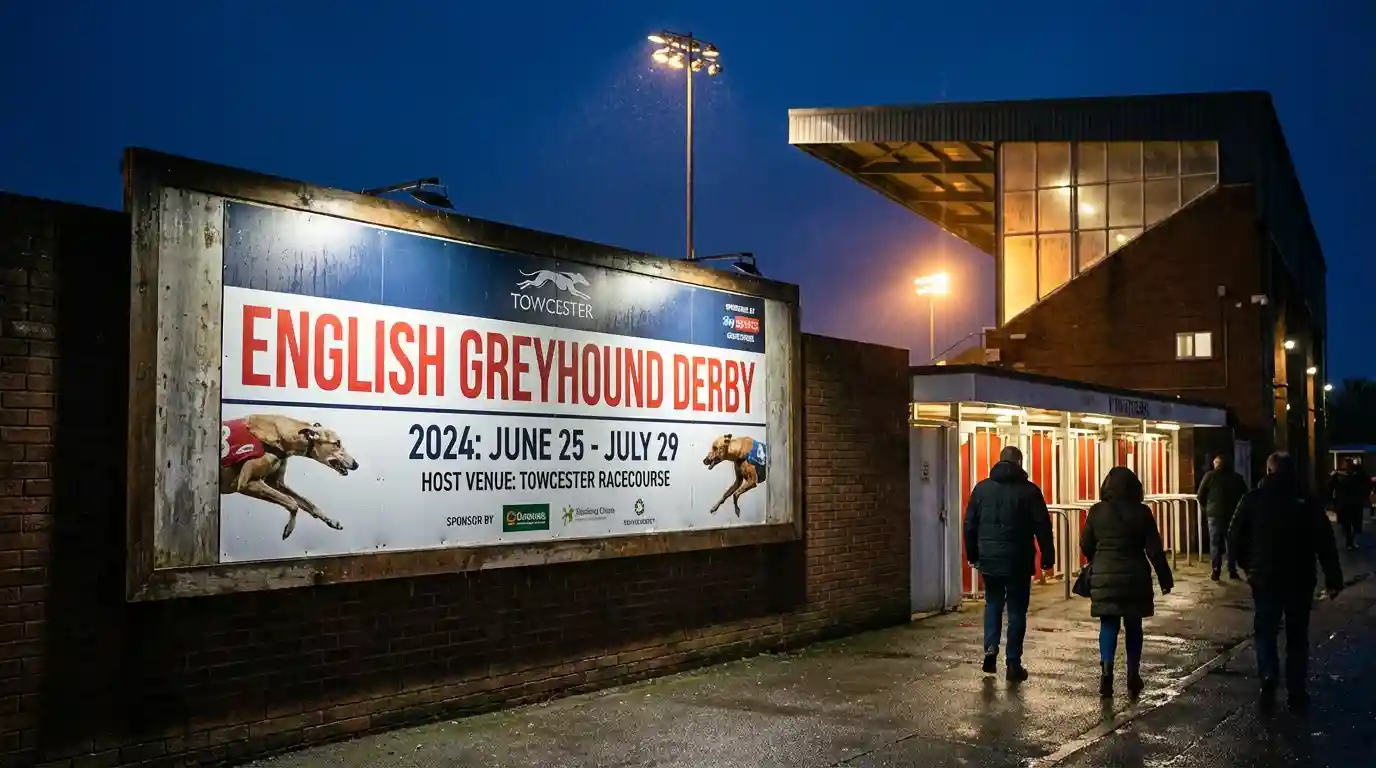
The Greyhound Derby is the biggest single-event betting market in greyhound racing. Held annually, it attracts the top dogs from across the UK and Ireland, and the ante-post market generates more interest and liquidity than any other greyhound futures event. Bookmakers open the market after early-round heats establish the form picture, and prices adjust through the quarter-final and semi-final stages before the six-runner final.
Derby ante-post betting has a specific structure. The tournament format means dogs must win or place in multiple rounds to reach the final. Each round eliminates contenders and reshuffles the market. A 20/1 ante-post shot that wins its first-round heat might shorten to 10/1. If it then draws a tough semi-final and faces other leading fancies, it might drift back to 14/1. These price fluctuations create opportunities for punters who are either willing to take early positions or who can identify when the market has overreacted to a single round’s result.
The St Leger, typically run over the longer distance of 660 metres or more, is the second most significant greyhound ante-post event. Its market is smaller than the Derby but follows the same principles: multi-round qualification, ante-post pricing on the outright winner, and non-runner stakes forfeited. The Greyhound Oaks (for bitches) and various track-specific opens also generate ante-post interest, though at significantly lower levels of liquidity.
One underappreciated angle in major event ante-post betting is trap draw. In the Derby and similar tournaments, the draw for each round is made after qualifying. A dog might be the form pick heading into the semi-final, but if it draws trap 6 at a track with strong inside bias, its pre-draw ante-post price may have been too short. Conversely, a dog that gets a favourable draw might suddenly look underpriced. Punters who wait until after the draw is published — but before the bookmakers fully adjust — can sometimes find a narrow window of mispriced value.
Risks and Rewards: The Ante-Post Balance Sheet
The reward side of ante-post is straightforward: longer prices. A dog that eventually goes off at 5/2 in the final might have been available at 8/1 or 10/1 in the weeks before. If you identified the dog early, your return is double or triple what a race-day bet would have produced. Across the major events, there are almost always one or two dogs whose ante-post price looks generous in retrospect.
The risk side is equally clear: stake loss on non-runners. Greyhound injuries are common. Dogs pull muscles, sustain track injuries, develop illness, or simply lose form between the ante-post bet and the event. In a multi-round tournament, the attrition is built into the format — not every qualifying dog will make the final, and if yours doesn’t, the money is gone. There’s no partial refund, no consolation payout, and no way to recover the stake.
The mathematical reality is that most ante-post greyhound bets lose, because most dogs don’t win the event you’ve backed them for. But the same is true of any long-priced bet. The question is whether the price compensates for the additional risks — non-runner, draw, form fluctuation — that don’t apply to a race-day bet. If you assess a dog’s true chance of winning the Derby final at 15% and you can back it at 10/1 ante-post (implied probability 9.1%), the bet has positive expected value even after accounting for a reasonable non-runner probability. If the same dog is 4/1 on race day (implied probability 20%), the value has evaporated.
Bankroll discipline for ante-post betting means small stakes and selective action. Treat ante-post bets as long-term speculative positions, not as weekly betting activity. One or two well-researched ante-post bets on a major event, at stakes you can afford to write off entirely, is the appropriate approach. Building a portfolio of ante-post positions across multiple events is expensive and hard to manage.
Early Price, Extra Risk — But the Maths Can Work
Ante-post greyhound betting isn’t for every punter. It demands patience (weeks between bet and result), tolerance for total stake loss (non-runners), and the ability to assess a dog’s chance in an event that hasn’t been fully shaped yet. But for punters who follow the major events closely and can identify contenders before the wider market prices them correctly, the ante-post market offers something that day-to-day greyhound betting rarely does: genuinely long odds on dogs with a genuine chance.
The punters who do well ante-post are the ones who know the dogs, know the trainers, know the tracks, and — critically — know when the price compensates for the risk. That’s a narrow set of conditions. When they align, the bet is worth making.