Greyhound Trainer and Kennel Analysis
Best Greyhound Betting Sites – Bet on Greyhounds in 2026
Loading...
Behind Every Greyhound Is a Trainer — and the Trainer Matters More Than You Think
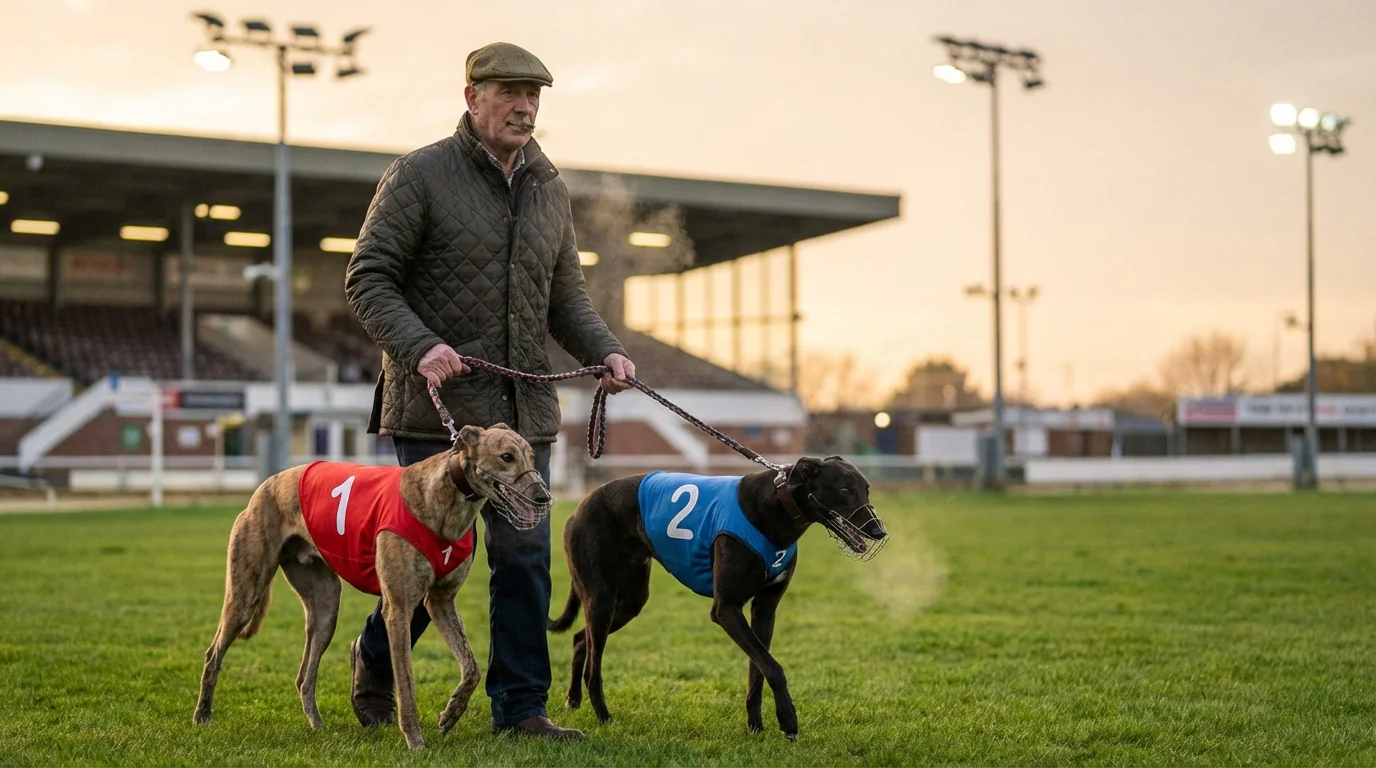
Most greyhound punters study the dog. Fewer study the trainer. That’s an oversight, because the trainer’s influence on a greyhound’s performance is substantial and measurable. The trainer decides when a dog races, at what distance, at which track, and in what condition. They manage the dog’s weight, fitness, and recovery between runs. They know things the form figures don’t show — whether a dog is peaking, tired, carrying a niggle, or being aimed at a specific target. All of that knowledge flows into the racecard as a single name next to each runner, and the punters who pay attention to that name have access to information the raw form doesn’t capture.
Greyhound training in the UK is a professional discipline, regulated by the GBGB, and the gap between the best trainers and the average is wider than most punters appreciate. A top kennel running dogs across multiple tracks with a 25% strike rate is operating in a fundamentally different league from a smaller operation managing 12-15%. That gap shows up in the results, and it shows up in the betting — if you know where to look.
Why Trainer Form Tells You What Dog Form Can’t
The form figures on a race card tell you what happened in past races. They don’t tell you why it happened or what’s likely to happen next. The trainer is often the missing variable that connects the past to the future. A dog with declining form might be reaching the end of its competitive window — or it might be a dog the trainer has deliberately placed in tougher grades to toughen it up before targeting a specific race. The form looks the same in both cases. The trainer’s intent is completely different.
Trainers also control race selection in ways that directly affect your assessment. A trainer running a sprinter over a staying trip might be testing its stamina ahead of a distance switch, or might simply have limited options at the track that week. A trainer entering a dog at a track where it’s never raced before might be targeting a surface or bend configuration that suits the dog’s running style. These decisions carry information about the trainer’s expectations, and they’re invisible to the punter who only reads the form figures.
Kennel form — the collective performance of a trainer’s string of dogs — is one of the most underused data points in greyhound betting. When a kennel is “in form,” multiple dogs from that operation will be running well simultaneously. This reflects the trainer’s management: feeding, exercise, veterinary care, and race preparation are applied across the entire kennel. If three of a trainer’s dogs have won in the past week, the fourth runner on tonight’s card is more likely to be well-prepared than a dog from a kennel that’s had no recent winners.
The reverse is equally instructive. A trainer whose dogs have been underperforming for several weeks may be dealing with a kennel issue — illness, environmental change, staffing disruption — that affects all runners. The individual dog’s form might look isolated, but the kennel pattern suggests a systemic problem. Punters who track kennel form can spot these phases and adjust their assessment of any individual runner from that operation.
Trainer changes are another signal. When a dog moves from one kennel to another — which happens regularly in UK greyhound racing — its first few runs for the new trainer can be unpredictable. Some dogs improve immediately with a change of environment and training regime. Others take time to adjust. The market often underreacts to trainer changes because the dog’s previous form is the most visible data, and the new trainer’s influence hasn’t yet shown up in the results.
Finding Trainer Strike Rates and Kennel Data
Trainer statistics are less readily available in greyhound racing than in horse racing, where platforms like Racing Post routinely display trainer strike rates, course records, and seasonal trends. In greyhound racing, you often need to assemble this data yourself or use specialist services.
The most direct method is to track results at your regular betting tracks. If you typically bet on four or five venues, building a simple log of trainer names, runners, and results over a few months gives you a proprietary dataset that most other punters don’t have. Record the trainer, dog, grade, finishing position, and price for each runner. Over 100-200 races at a track, clear patterns emerge: which trainers have the highest win rates, which improve dogs after grade drops, and which consistently place dogs at tracks where their running style suits the geometry.
Some greyhound data providers publish trainer statistics, including strike rates by track, distance, and grade. These services are often subscription-based and aimed at regular bettors. The data quality varies, but the better services provide rolling strike rates (last 14 days, last 30 days, last 90 days) that let you assess current form rather than lifetime averages. A trainer with a 20% lifetime strike rate who’s running at 35% in the past fortnight is experiencing a hot streak that’s relevant to tonight’s races.
The GBGB’s official website publishes results and race cards that include trainer names, which provides the raw data for your own analysis even if it doesn’t calculate the statistics for you. Cross-referencing results from this source with your own tracking log is the most reliable way to build an accurate picture of trainer performance at your target tracks.
Social media and greyhound forums also carry useful information, though it requires careful filtering. Kennel insiders, track regulars, and experienced punters often share observations about trainer form, dog condition, and kennel changes that don’t appear in any formal data set. Treating this information as supplementary intelligence — useful for context but not as a sole basis for betting — is the right approach.
Track Specialists: Trainers Who Win Where It Matters
Many greyhound trainers are attached to or based near specific tracks, and their dogs race predominantly at those venues. This creates a form of home advantage that’s quantifiable and persistent. A trainer who runs 80% of their dogs at one track knows that track’s idiosyncrasies intimately — the surface characteristics, the bend geometry, the trap biases, the way the hare runs. Their dogs are trained on that surface, trialled at that track, and prepared for its specific demands.
The statistical evidence for track specialism is strong. At most UK greyhound venues, one or two trainers consistently outperform the field by a margin that exceeds what their dogs’ individual form would suggest. These trainers have win rates at their home track of 22-28%, against a baseline expectation of 16.7%. The premium comes from superior preparation, better race selection, and accumulated knowledge of how the track plays on different nights and in different conditions.
For betting purposes, the implication is straightforward. A dog from a track-specialist trainer running at its home venue carries an invisible advantage that the form figures alone don’t capture. If you’re choosing between two similarly rated dogs — one from the local specialist, one from a trainer who sends runners to this track occasionally — the local trainer’s runner has a structural edge that justifies a slight preference in your assessment.
This isn’t absolute. A good dog from any kennel can win at any track. But at the margins — where greyhound betting decisions are actually made — the trainer’s track record at a specific venue is a legitimate factor. And because many punters ignore it entirely, the market doesn’t always price it efficiently.
The Trainer Is Information — Use It
Trainer analysis won’t transform your greyhound betting overnight. It’s not a magic angle or a secret system. It’s an additional layer of information that, when combined with form, times, trap draw, and conditions, produces a more complete picture of each runner’s prospects. The trainers who run at high strike rates, who specialise at specific tracks, and whose kennels are currently in form — these are patterns that repeat, that can be measured, and that the market underprices because most punters don’t bother to look.
Add trainer form to your assessment process. Track it. Measure it. Over time, the data will tell you which names to respect and which to discount — and that knowledge, quiet as it is, will show up in your results.