
Responsible Greyhound Betting
 Available in US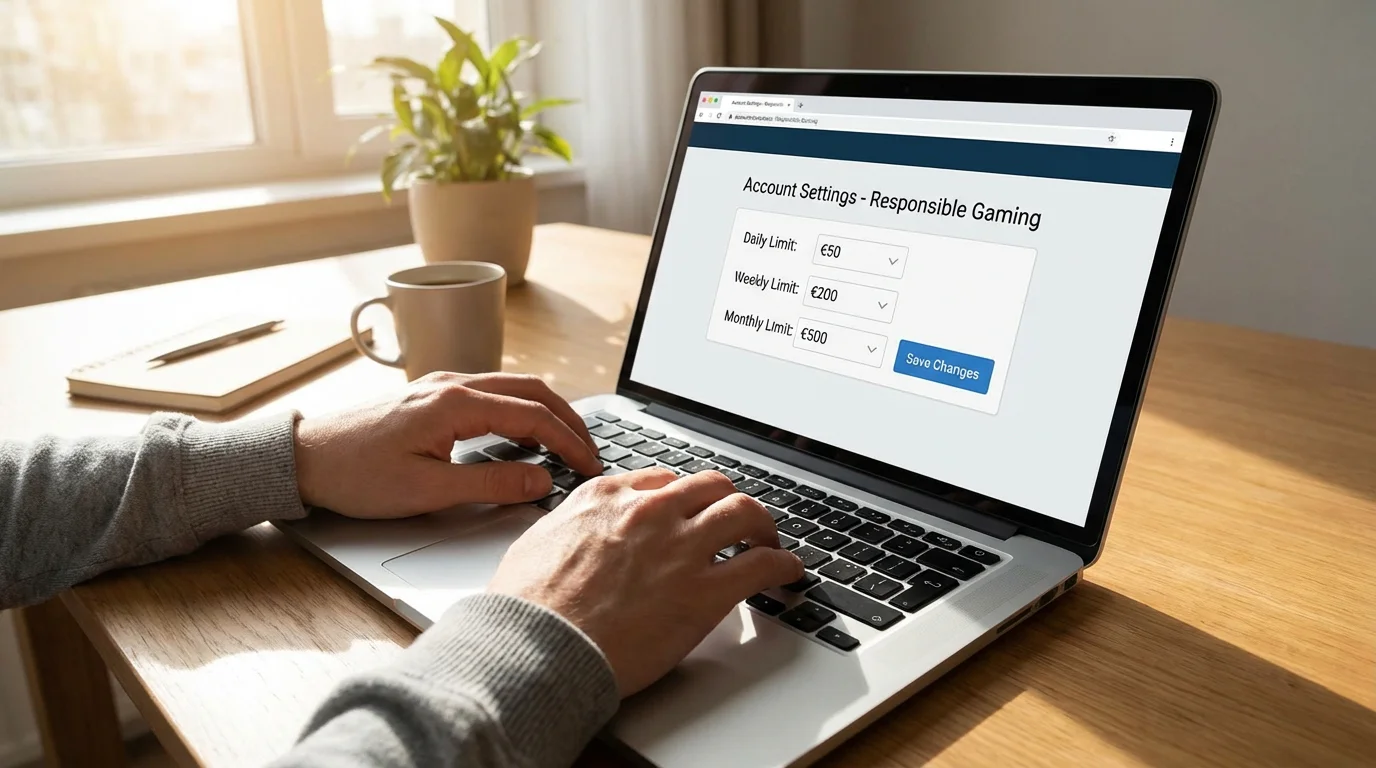
Betting Should Add to Your Life — Not Cost You More Than Money
Every article on this site is about betting better: sharper analysis, smarter staking, more informed decisions. But none of that matters if the betting itself becomes a problem. Greyhound racing — with its rapid schedule, near-continuous availability, and low barriers to placing a bet — carries specific characteristics that make it easier to lose track of spending, time, and control than sports with less frequent events. Acknowledging that isn’t weakness. It’s the most important piece of betting intelligence this guide can offer.
Responsible gambling isn’t a topic that most betting guides address with real depth. It tends to appear as a footnote or a compliance paragraph. That’s a disservice to the readers, because the skills that make someone a good greyhound bettor — pattern recognition, comfort with risk, engagement with probability — are the same traits that can make problem gambling harder to recognise from the inside. The person most confident in their ability to manage risk is sometimes the last to notice when the risk has started managing them.
This article covers the practical tools available for managing your greyhound betting, the signs that suggest betting may be moving from entertainment toward harm, and where to access support. It’s written for everyone who bets on greyhounds, not just those who suspect a problem — because the best time to establish healthy habits is before you need them.
Setting Limits: The Tools That Every Bookmaker Provides
Every licensed UK bookmaker is required by the Gambling Commission to offer deposit limits, loss limits, session time limits, and reality checks. These tools exist in your account settings, and they work exactly as described: once set, they cannot be exceeded until the limit period expires, and increasing a limit requires a cooling-off period (typically 24 to 72 hours) before the change takes effect. Decreasing a limit takes effect immediately.
Deposit limits cap the total amount you can add to your account in a day, week, or month. If you set a weekly deposit limit of £50, you cannot deposit more than that in any seven-day period regardless of how many times you attempt it. This is the single most effective structural control for managing betting spend, because it prevents the impulsive top-up — the moment when you’ve lost your planned stake and decide to deposit more to chase it back.
Loss limits cap the net amount you can lose in a given period. They operate differently from deposit limits because they account for winnings. If your weekly loss limit is £30 and you’ve deposited £50 but won £25 back, your net loss is £25 and you can continue betting. If you lose the remaining balance, the limit activates. Loss limits are useful for punters whose deposits don’t accurately reflect their actual exposure — someone depositing small amounts frequently, for example.
Session time limits and reality checks serve a different purpose. Greyhound betting sessions can stretch over hours as meetings run from afternoon through evening across multiple tracks. A reality check — a pop-up notification that tells you how long you’ve been logged in and how much you’ve spent — interrupts the flow and forces a conscious decision to continue. It’s easy to dismiss, but the act of dismissing it still requires awareness. Some punters find that setting a one-hour reality check is enough to prevent sessions from expanding beyond what they intended.
The practical recommendation is to set limits before you need them. Don’t wait until you’ve had a bad session to impose a deposit cap. Set it now, at a level that matches your planned betting budget, and leave it in place. The limit isn’t a restriction on your freedom. It’s a decision you’re making now, when you’re thinking clearly, that protects you later, when you might not be.
Self-Exclusion: When a Break Is the Right Call
Self-exclusion is a formal process that blocks your access to a bookmaker’s services for a defined period — typically six months, one year, or five years. During the exclusion period, you cannot log in, place bets, or access your account. The bookmaker is legally obligated to enforce the exclusion and to refuse service if you attempt to circumvent it.
GAMSTOP is the UK’s national self-exclusion scheme for online gambling. Registering with GAMSTOP blocks your access to all UKGC-licensed online gambling sites for a minimum of six months, with options for one year or five years. It covers every licensed bookmaker, casino, and gaming site, not just individual firms. A single registration closes every online account simultaneously. The process is free, confidential, and can be completed in minutes at gamstop.co.uk.
For in-shop and on-track betting, the Multi-Operator Self-Exclusion Scheme (MOSES) allows you to exclude yourself from betting shops. The scheme is coordinated between major operators and covers most licensed premises. On-track self-exclusion is handled directly with the venue.
Self-exclusion is not a failure. It’s a tool — the most decisive one available — for anyone who recognises that a period away from betting would be beneficial. It can be used proactively, before a situation escalates, or reactively, in response to behaviour that’s already causing concern. The cooling-off period before reinstatement ensures that the decision to return to betting is deliberate rather than impulsive.
If you’ve ever thought about self-exclusion and dismissed the idea as overreaction, consider that the thought itself carries information. People who are entirely comfortable with their betting don’t typically consider excluding themselves. The fact that the option crossed your mind may be worth sitting with.
Warning Signs: What Problem Gambling Looks Like From Inside
Problem gambling rarely announces itself. It develops gradually, and the transition from controlled entertainment to harmful behaviour happens along a continuum rather than at a single identifiable moment. The warning signs are easier to recognise in retrospect than in real time, which is why listing them explicitly has value: you can compare your own behaviour against the patterns and decide whether any apply.
Betting more than you planned to, more often than you intended, and for longer than you expected are the most common early signs. If you set out to bet £20 on an evening’s card and routinely find yourself depositing more, that gap between intention and action is meaningful. Everyone has occasional sessions that run over budget. When it becomes the pattern rather than the exception, the pattern is telling you something.
Chasing losses — betting more to recover money already lost — is the behaviour most closely associated with problem gambling and the one most damaging to both bankroll and wellbeing. In greyhound betting, where another race is always minutes away, the temptation to chase is structural. The sport’s schedule enables the behaviour even when your judgement knows it’s counterproductive. If you find yourself regularly increasing stakes after losses with the specific intention of getting back to even, that’s a signal that demands honest self-assessment.
Betting as emotional regulation — gambling to relieve stress, to improve a bad mood, or to escape from problems elsewhere in your life — represents a shift from recreational activity to coping mechanism. Betting that fills an emotional need rather than an entertainment one tends to escalate, because the underlying need doesn’t diminish after a win and intensifies after a loss.
Concealment is another significant indicator. Hiding the extent of your betting from a partner, family member, or friend — minimising how much you’ve spent, lying about how much time you’ve been gambling, or keeping separate accounts to obscure the money flow — suggests that you already recognise the behaviour would concern people who care about you. That recognition, even if you rationalise it, is information worth acting on.
Support Is Available — and Asking for It Is Strength
If anything in this article resonated with your own experience, support is available and it’s confidential. The National Gambling Helpline, operated by GamCare, is available 24 hours a day on 0808 8020 133 and through live chat at gamcare.org.uk. The service is free, non-judgemental, and staffed by trained advisors who understand gambling-related harm.
GamCare also offers structured treatment programmes, counselling, and peer support for people experiencing gambling difficulties. Their services are available to the bettor and to anyone affected by someone else’s gambling — partners, family members, and friends.
Greyhound betting, at its best, is a skilful, engaging pursuit that rewards knowledge and discipline. At its worst, it consumes time, money, and wellbeing in ways that the person experiencing it often can’t see clearly. The line between those two states is maintained by self-awareness, honest reflection, and the willingness to use the tools and support available. None of that is complicated. All of it requires courage.
