Tote Betting on Greyhounds
Best Greyhound Betting Sites – Bet on Greyhounds in 2026
Loading...
The Tote Is a Different Animal — Literally
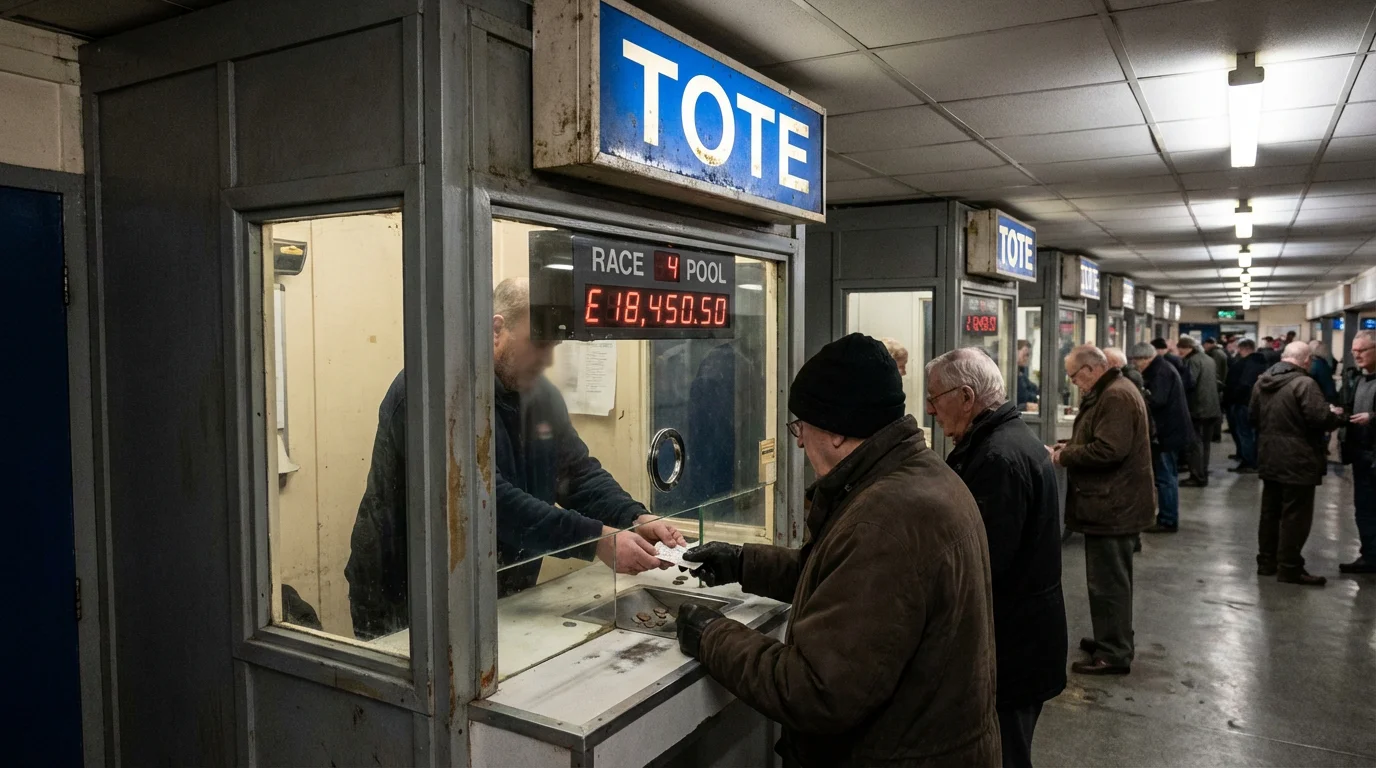
The tote is a different animal — your return depends on what everyone else bets, not what the bookmaker offers. If you’ve only ever bet at fixed odds with a bookmaker, the tote will feel unfamiliar. There’s no price displayed before you bet. No guaranteed return per unit. No bookmaker setting the market. Instead, all the money wagered on a race goes into a pool, the operator takes a deduction (their commission), and the remainder is divided among the winning bets. Your return is determined after the race, by mathematics, based on how much money was bet and how it was distributed.
Pool betting has been part of greyhound racing since the sport’s early days in Britain. The tote windows at every licensed track are as much a part of the experience as the traps and the hare. While fixed-odds betting has taken the dominant share of the market — particularly online — pool betting retains a genuine role at the track and offers a different risk-reward profile that experienced punters can exploit in specific situations.
Understanding how pools work doesn’t require a finance degree, but it does require shifting your thinking from “what odds am I getting?” to “how much money is in the pot and how is it distributed?” That shift changes your approach to the bet entirely.
Pari-Mutuel Explained: How Pool Dividends Are Calculated
The pari-mutuel system — the formal name for pool betting — operates on a simple principle. All stakes on a race go into a single pool. A percentage is deducted by the operator (typically 15-30% depending on the bet type and the track). The remaining money is then distributed proportionally among the holders of winning tickets.
Walk through an example. A tote win pool on a six-dog race collects £1,000 in total stakes. The operator deducts 20%, leaving £800 to be distributed. If £300 of the original stakes were placed on the winning dog, the £800 is shared among those £300 worth of tickets. The dividend is £800 / £300 = £2.67 per £1 staked. A £5 bet returns £13.33. If only £100 had been placed on the winning dog, the dividend would be £800 / £100 = £8.00 per £1. Same pool, same deduction — but the return swings wildly depending on which dog won and how popular it was with other bettors.
This is the fundamental difference from fixed odds. With a bookmaker, your return is known at the point of betting. With the tote, your return is unknown until the race is over and the pool is divided. The more popular your selection was among other tote bettors, the lower your dividend. The less popular it was, the higher the payout. This creates a natural dynamic where backing unpopular dogs on the tote can occasionally produce dividends far in excess of the corresponding bookmaker SP.
The deduction percentage is the tote’s equivalent of the bookmaker’s overround, and it’s typically higher. A 20% tote deduction is roughly equivalent to a 125% bookmaker overround, which means the tote’s structural cost is generally greater than betting with a traditional bookmaker. This is the price of participation in the pool system, and it means the tote needs to offer compensating advantages — larger dividends on specific outcomes — to justify its use.
Dividends are declared after each race and displayed at the track and through betting platforms. They’re expressed as returns per unit stake (usually per £1 or per £2 depending on the pool type). A declared dividend of £4.60 to a £1 unit means a £1 winning ticket returns £4.60 total — your £1 stake plus £3.60 profit.
Pool Bet Types at the Greyhound Track
The tote offers several bet types at greyhound meetings, each with its own pool, deduction rate, and dividend structure. The range varies between tracks, but the core products are consistent across most UK venues.
The tote win pool is the simplest: pick the winner. One pool, one dividend, one question. The win pool is the most liquid tote product at greyhound meetings and produces the most predictable dividends because the money is concentrated on a single outcome. Win pool dividends generally track close to the bookmaker SP, though they can diverge when the tote betting pattern differs from the bookmaker market — which happens more often than you’d think, because the tote’s customer base skews toward trackside casual bettors whose selections don’t always align with form-based bookmaker prices.
The tote place pool asks you to select a dog that finishes first or second. Dividends are typically lower than win dividends because there are two winning outcomes splitting the pool, and the deduction rate may differ from the win pool. Place tote bets are the conservative trackside option — lower risk, lower return.
The tote forecast (sometimes called the dual forecast or exacta at some tracks) requires you to select the first two finishers. Like the bookmaker forecast, it’s a higher-difficulty bet with a bigger potential payout. The tote forecast pool is separate from the win pool, and its dividends are calculated from the money bet into that specific pool. Because forecast pools are typically smaller than win pools, the dividends can be volatile — very large when an unpopular combination lands, very modest when the obvious pairing comes in.
The Plum bet is a pool product specific to some UK greyhound tracks. It typically requires you to select the winner of two or three nominated races on the card. The pool accumulates across those races, and only bets that correctly identify all the winners share the payout. Plum pools can build to significant levels on busy cards, and the dividends for correct tickets can be substantial — comparable to accumulator returns but from a pool structure rather than fixed odds.
Duella is another track-specific pool bet offered at some venues. It’s a head-to-head pool where you select one of two nominated dogs to beat the other (regardless of where they finish in the overall race). The pool is divided between those who backed the “winning” dog in the head-to-head. Duella dividends are typically modest because the pool splits roughly evenly between two outcomes, but it offers a simple betting format for casual trackgoers who want action without needing to predict the outright winner.
Tote vs Fixed Odds: When Does the Pool Win?
The tote’s higher structural deduction means that, on average, it returns less to bettors than fixed odds with a bookmaker. This is a mathematical fact, not an opinion. Over a large number of bets spread across all outcomes, the tote pays out less per pound wagered than a bookmaker with a typical overround. If your default approach is to bet the favourite or the top two in the market, fixed odds will almost always serve you better than the tote.
Where the tote can outperform is on outsiders. Because pool dividends are determined by the distribution of money rather than by a bookmaker’s assessment, a dog that attracts very little tote money but wins can produce a dividend significantly above its bookmaker SP. This happens when the tote betting pattern is heavily skewed toward one or two popular dogs, leaving the rest of the pool under-bet. If a 6/1 shot with the bookmaker wins and attracted only 5% of the tote pool, the tote dividend could be equivalent to 10/1 or higher.
This effect is amplified in forecast and tricast pools, where the number of possible outcomes is much larger and the money is spread more thinly across combinations. An unpopular forecast combination can produce a tote dividend that dwarfs the CSF because so little pool money was bet on that specific pairing. These are the jackpot moments for tote bettors — rare but dramatic when they occur.
The practical advice for most punters is clear: use fixed odds as your default and use the tote selectively. If you’re at the track and fancy a longer-priced dog that the crowd isn’t backing, a tote win bet can offer better value than the bookmaker SP. If you’re playing forecast or tricast combinations involving unfancied dogs, the tote pool may outpay the computer forecast. For everything else — favourites, second favourites, standard win bets — the bookmaker is the better channel.
The Pool Has Its Place
Tote betting is part of the fabric of greyhound racing at the track. It’s a different way to bet — less precise than fixed odds, less predictable, but occasionally more generous when the results go against public money. It rewards the contrarian, the outsider backer, and the punter who understands that in a pool system, the crowd’s opinion directly determines your payout. When the crowd is wrong and you’re right, the tote pays you for their mistake.